The Enduring Advantages of Solar Water Heaters in Southeast Asia’s Tropical Climate
Southeast Asia stands out as one of the most naturally privileged regions in the world for solar energy utilization, with its unique tropical and subtropical climate creating nearly ideal conditions for the widespread adoption of solar water heaters. For millions of households and small businesses across countries like Indonesia, Thailand, Laos, Singapore and Vietnam, these systems are no longer niche eco-friendly alternatives, but practical, cost-effective solutions that align perfectly with local environmental conditions, daily living needs and long-term sustainable development goals.
The most fundamental advantage of solar water heaters in this region comes directly from Southeast Asia’s exceptional solar resource endowment. Most areas in the region receive an annual average of 1600 to 2400 hours of sunshine, with many core zones recording total solar radiation of 1200 to 1900 kWh per square meter every year. Countries including Laos have even been classified as global Class A high-quality solar resource areas, where clear skies and high irradiance levels allow solar collectors to operate at peak efficiency for most of the year. Unlike many temperate regions that face long, cloudy winters with insufficient solar output, Southeast Asia’s consistent high ambient temperatures, usually ranging between 25°C and 35°C throughout the year, drastically reduce the energy required to heat water from ambient levels. This means a standard residential solar water heater can easily reach its designed target water temperature of 50-60°C even on partly cloudy days, delivering a steady supply of hot water without relying on backup electric or gas heating for most days of the year.
This perfect climate match translates directly into remarkable long-term economic benefits for local households. While the initial installation cost of a quality solar water heater may be slightly higher than that of a conventional electric or gas water heater, the return on investment becomes obvious within just two to four years of regular use. In Singapore’s public housing estates, simulation studies of solar water heating systems installed on rooftop spaces have confirmed that these systems can replace nearly 100% of the electricity previously used for domestic hot water, cutting monthly household utility bills by 15% to 25% for an average family of four. For communities in rural areas of Thailand and Indonesia, where grid electricity supply is often unstable and subject to frequent blackouts, a solar water heater eliminates the frustration of running out of hot water exactly when it is needed, while also protecting families from unpredictable fluctuations in energy prices that are common in many regional markets. Over a typical 15 to 20 year service lifespan, a single residential solar water heater can save its owners thousands of dollars in energy costs, making it one of the most reliable home improvement investments available in the region.
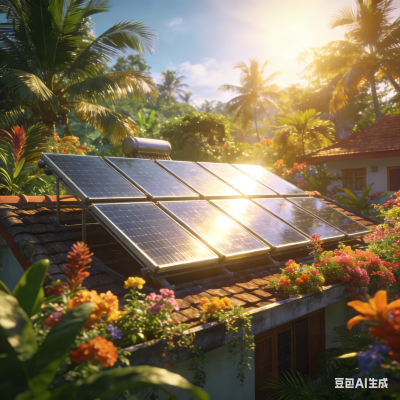
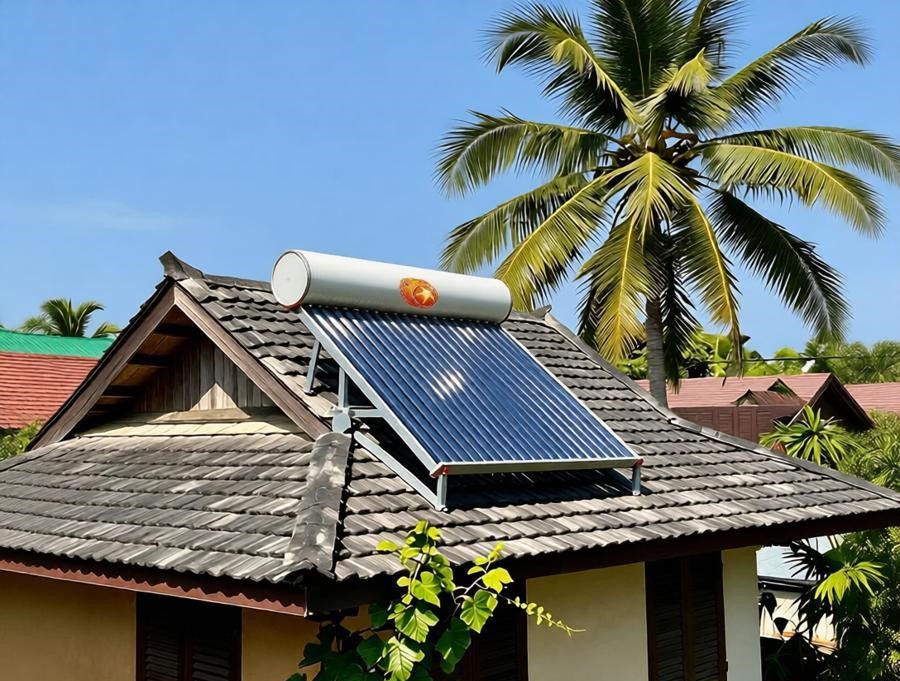
Another key advantage that makes solar water heaters uniquely suitable for Southeast Asia is their outstanding durability and low maintenance requirements in the region’s characteristic hot, humid and rainy climate. High-quality flat-plate solar collectors, constructed with corrosion-resistant metal frames and tempered glass covers, are specifically designed to withstand prolonged exposure to high humidity, intense ultraviolet radiation and occasional heavy monsoon rains. Unlike many conventional water heaters that can suffer from rapid component degradation in tropical conditions, most modern solar water heating systems have no moving parts in their core heating loop, which drastically reduces the risk of mechanical failure. Routine maintenance is extremely simple: most systems only require a quick surface cleaning of the collector panels once every two to three months to remove accumulated dust or fallen leaves, and an annual check of pipe connections to ensure there are no small leaks. This low-maintenance design is particularly valuable for local residents who do not have easy access to frequent home appliance repair services, allowing the system to operate reliably year after year with very little extra effort or cost.
Beyond individual household benefits, the widespread adoption of solar water heaters also delivers far-reaching public advantages that align perfectly with Southeast Asia’s broader clean energy development goals. Many countries in the region are currently facing growing pressure on their power grids, especially during the dry season when hydropower generation – which supplies over 90% of electricity in countries like Laos – drops sharply and leads to widespread power shortages. By shifting the huge electricity demand for domestic water heating away from the public grid to distributed solar energy on individual rooftops, solar water heaters can significantly reduce peak-time power consumption, ease the strain on overloaded grids, and help avoid the need for expensive new fossil-fuel power plants. Every square meter of solar collector installed in Southeast Asia can reduce approximately 150 to 200 kilograms of carbon dioxide emissions each year, making a tangible contribution to regional efforts to fight climate change and improve local air quality.
As more local governments across Southeast Asia introduce supportive policies, incentives and rebates to promote renewable energy adoption, solar water heaters are evolving from a smart personal household choice into a cornerstone of the region’s clean energy transition. For a region blessed with endless sunshine, high demand for hot water for daily showering, cleaning and cooking, and a growing desire to reduce reliance on expensive imported fossil fuels, solar water heaters are not just a temporary trend – they are a perfectly matched, future-proof solution that will continue to bring economic, environmental and social benefits to generations of people living under the tropical sun.